Siena Day Trips Without a Car: Train, Bus and Tours
Every Siena day trip that works on public transport: the bus lines, the realistic journey times, and the Sunday rule that ruins plans.
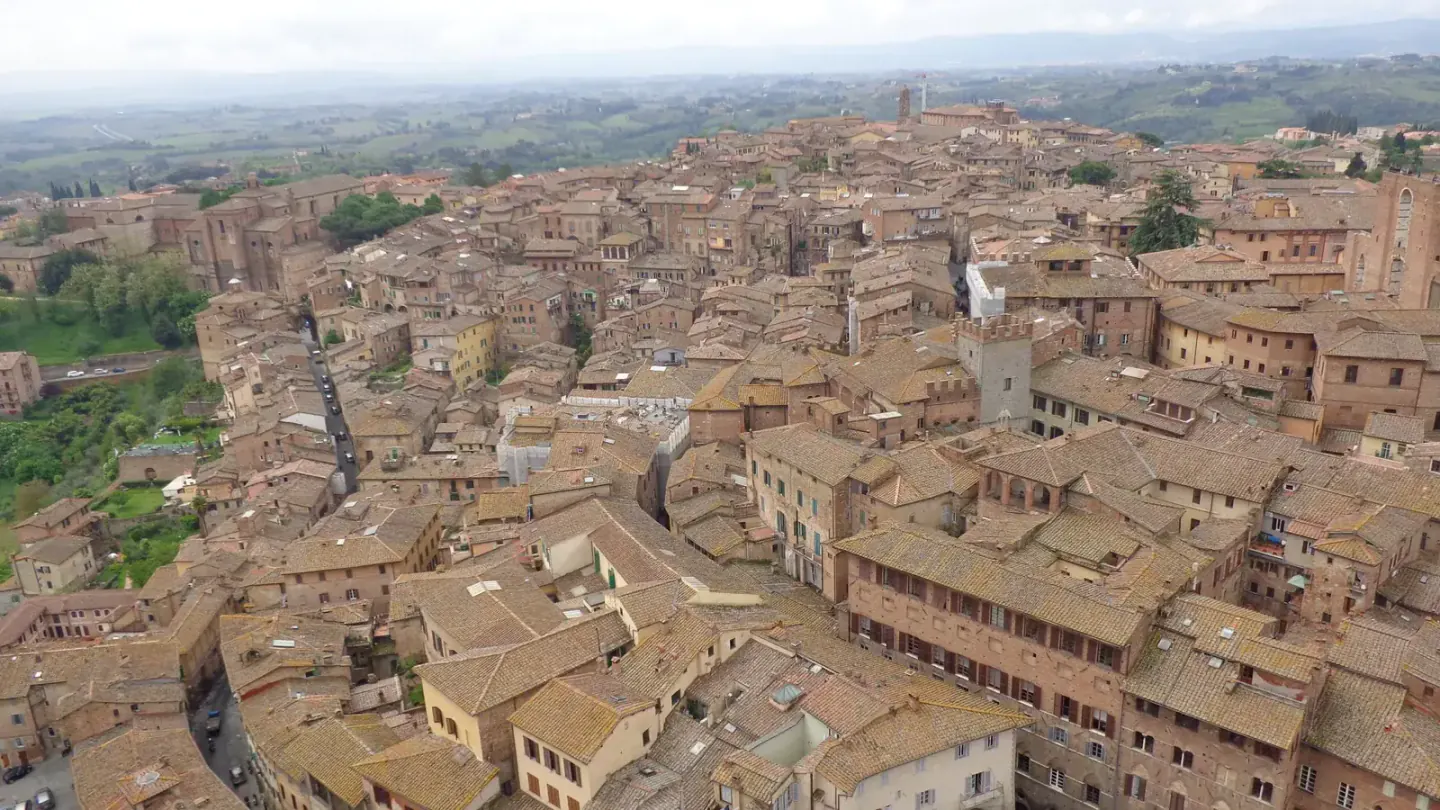
Photo: Superchilum, CC BY-SA 4.0. Cropped to 16:9, resized, and converted to WebP.
In this guide
- Quick answer
- No-car day trips from Siena at a glance
- First, understand Siena’s transport geography
- 1. Florence without a car
- 2. Arezzo by train
- 3. San Gimignano by bus
- 4. Buonconvento by train
- 5. Rapolano Terme by train
- 6. Monteriggioni by bus
- 7. Chianti by guided tour
- 8. Val d’Orcia by guided tour
- 9. Montalcino and Brunello without driving
- Can you visit Montepulciano without a car?
- Can you visit the coast without a car?
- Train, bus, or tour: how to choose
- Booking no-car transport
- Sunday and holiday warning
- Where to stay for no-car day trips
- A three-day no-car Siena plan
- Common no-car mistakes
- Final recommendation
- FAQ
Quick answer
You can take rewarding day trips from Siena without a car, but the destination must match the transport. Florence and Arezzo work well by rail or bus. San Gimignano is possible by bus when the timetable fits. Chianti, Val d’Orcia, and winery routes are usually more satisfying with an organised tour because public transport was designed for local mobility, not a multi-village sightseeing loop.
This page owns the no-car decision. For a broader comparison including self-drive routes, use the best day trips from Siena. If you are still working out how to reach Siena itself without a car, Florence Airport to Siena sets out the two-stage bus and train route and the real fares.
Quick answer: Choose Florence or Arezzo for the simplest independent rail day, San Gimignano for a bus-based hill-town trip, Buonconvento or Rapolano Terme for a lower-key regional journey, and a guided Chianti or Val d’Orcia tour when the landscape, wineries, and multiple villages are the priority.
No-car day trips from Siena at a glance
| Destination | Best no-car method | Difficulty | Best for |
|---|---|---|---|
| Florence | Direct bus or regional train | Easy | Major art and first-time visitors |
| Arezzo | Regional train, sometimes with a connection | Easy–moderate | Art and a less crowded city |
| San Gimignano | Regional bus, timetable dependent | Moderate | Medieval towers |
| Buonconvento | Regional train | Easy–moderate | Small-town atmosphere |
| Rapolano Terme | Regional train | Moderate | Spa-focused day |
| Monteriggioni | Bus, limited timing | Moderate | Short medieval outing |
| Chianti | Guided tour | Easy once booked | Wine and villages |
| Val d’Orcia | Guided tour | Easy once booked | Landscapes and multiple towns |
| Montalcino | Guided wine tour | Easy once booked | Brunello and winery access |
First, understand Siena’s transport geography
Siena railway station sits below the historic centre. Reaching it takes additional time by escalator, local bus, taxi, or a substantial walk.
Regional buses can be more convenient because several services use stops around Piazza Gramsci or Viale Tozzi, closer to the centre. However, routes, stops, and timetables change, especially on Sundays, holidays, school periods, and during events.
Before every no-car day trip:
- Check the outbound and return journey.
- Confirm whether a transfer is required.
- Save the stop name.
- Verify Sunday and holiday service.
- Leave a backup return.
- Download the ticket or know where it is sold.
- Understand validation.
- Check strikes and disruptions.
- Account for Siena’s final uphill return.
The return journey matters more than the outbound journey.
1. Florence without a car
Florence is the easiest major city day trip from Siena. Regional buses and trains connect the two cities, and public transport is more practical than driving into central Florence.
Bus or train?
The bus often wins on city-centre convenience because it can arrive near central Florence and leave from a relatively central Siena stop. The train provides a familiar station environment but starts below Siena’s historic centre.
Use Florence to Siena by train or bus in reverse and confirm the current operator schedule.
What to do in one day
Choose one major booking and one walking route:
- Uffizi plus the historic centre.
- Accademia plus the Duomo area.
- Oltrarno and a food-focused day.
- Palazzo Pitti and Boboli Gardens.
- A first-time city walk with one museum.
Do not attempt every Florence headline attraction in a single day from Siena.
Best for: Travellers based only in Siena who would otherwise miss Florence.
2. Arezzo by train
Arezzo offers art, medieval and Renaissance streets, and a less obvious city day than Florence.
Search the exact Siena–Arezzo date through Trenitalia. Some journeys may require a connection, and frequency changes. Confirm the last practical return before committing to a museum or dinner.
A focused route can include Piazza Grande, the historic centre, one major art stop, and lunch.
Best for: Rail travellers, repeat Tuscany visitors, and people who want culture without Florence’s scale.
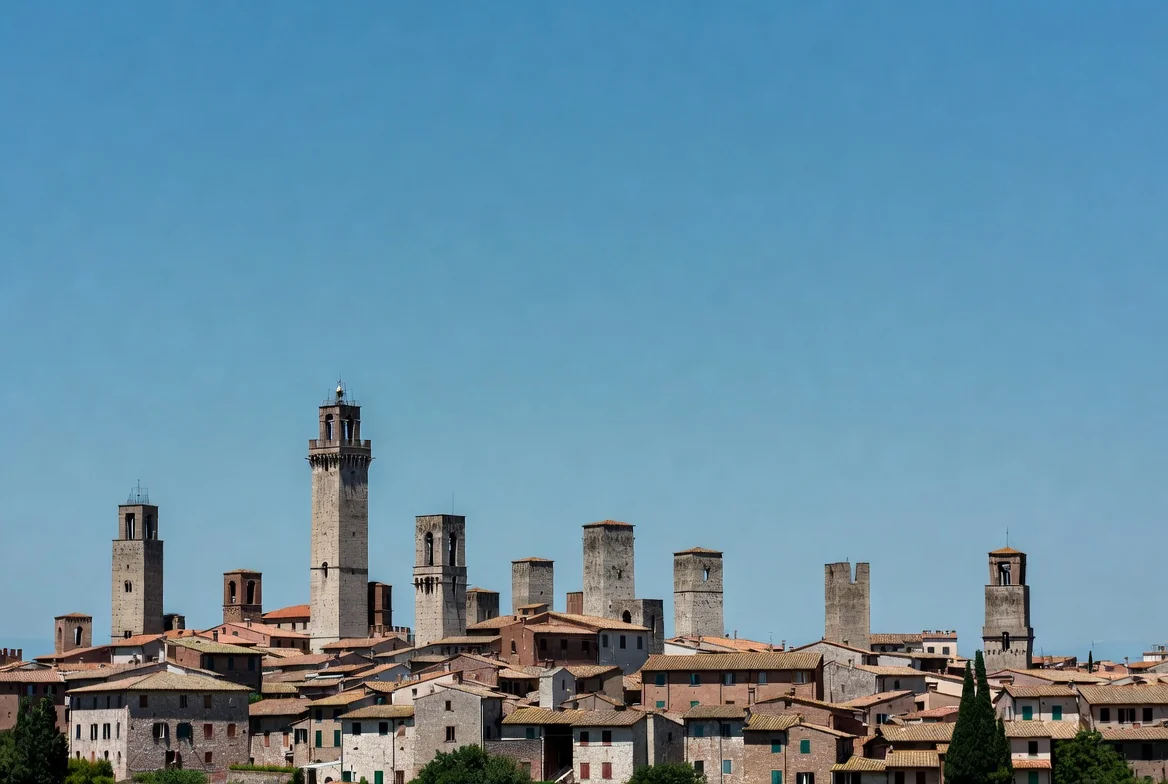
3. San Gimignano by bus
San Gimignano is one of the most popular Siena day trips without a car. The route can be direct on selected services or involve a connection, often around Poggibonsi. Timetables and stops must be checked for the exact day.
How to make the bus day work
- Leave early.
- Save the return stop.
- Screenshot the timetable.
- Identify a second return service.
- Avoid scheduling a fixed late attraction immediately before departure.
- Expect the town to be busiest around midday.
Once there, walk beyond Piazza della Cisterna and Piazza del Duomo. A viewpoint and quieter lanes make the visit feel less like a tour-bus stop.
Best for: First-time visitors who want a famous hill town and can work around the timetable.
4. Buonconvento by train
Buonconvento is a smaller, slower destination on the rail line south of Siena. It works for travellers who prefer a local-scale town to a packed highlight list.
Check current museum hours and train frequency. The day can combine the historic centre, lunch, and a walk without needing a complex transfer.
This is not a substitute for the panoramic Val d’Orcia road loop, but it provides an independent glimpse of southern Siena province.
Best for: Slow travel, repeat visitors, and a lower-pressure half or full day.
5. Rapolano Terme by train
Rapolano Terme can work as a spa-oriented no-car day. Rail access does not guarantee that every thermal facility is beside the station, so confirm the final walk or taxi and reserve the spa directly.
Check:
- Facility opening day.
- Advance booking.
- Swimwear and cap rules.
- Towel or robe rental.
- Child policy.
- Treatment schedule.
- Final train home.
A thermal day is most relaxing when the return is solved before entering the water.
Best for: Couples, recovery days, and travellers who need a break from museums.
6. Monteriggioni by bus
Monteriggioni is a compact walled village north of Siena. Bus access may be possible, but limited frequency can turn a short visit into a long waiting day.
Use it when the timetable provides a comfortable outbound and return. Otherwise, combine it with a guided trip or choose San Gimignano.
Do not allocate an artificial full day to the village. Its strength is a concise medieval stop.
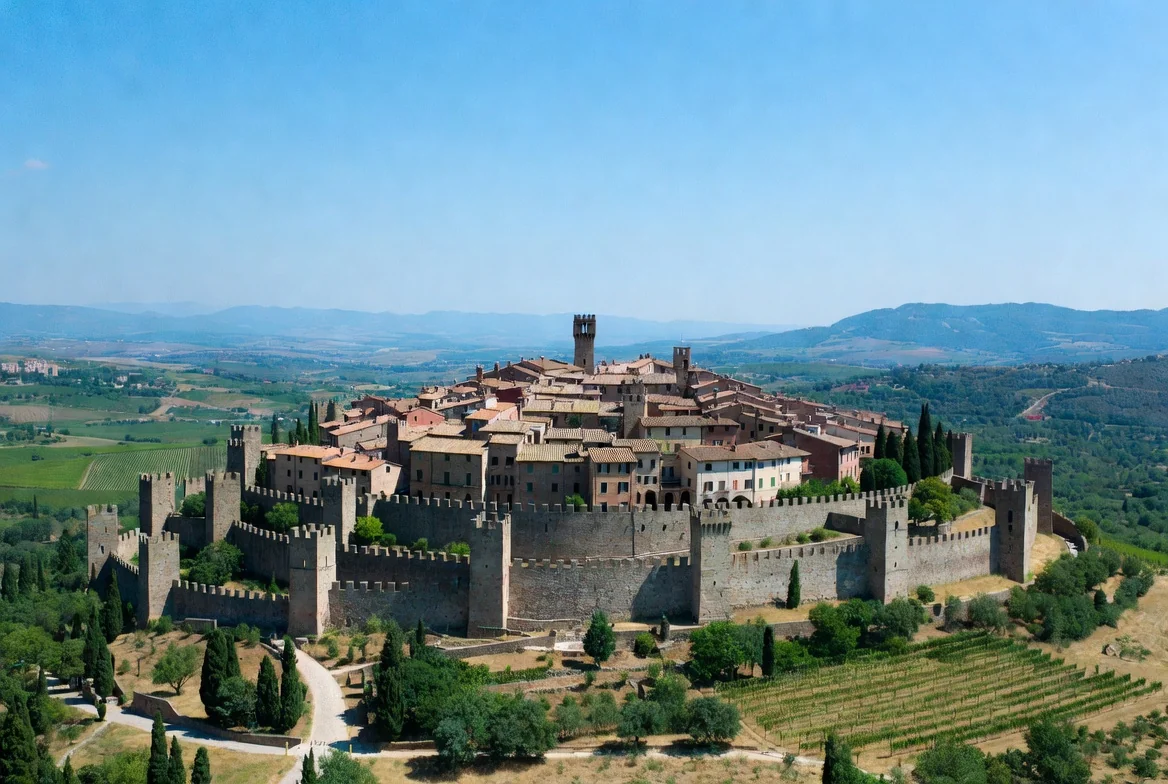
*Monteriggioni is a two-hour village, not a full day — plan the return bus before you go.*
Best for: A short outing, families, and travellers who prefer a small destination.
7. Chianti by guided tour
Chianti is a region, not one station. Its appeal comes from roads, vineyards, villages, producers, and landscape between stops.
Public buses serve local communities, but using them to create a winery loop is usually inefficient. A guided tour solves:
- Transport.
- Designated driver.
- Producer reservations.
- Rural navigation.
- Multiple stops.
- Return to Siena.
Compare group size, winery count, tasting quantity, meal, village time, and whether the guide remains with the group.
Which wine country to give the day to is its own decision, and not an obvious one: we compare Chianti and the Val d’Orcia side by side on landscape, wine culture, towns and car-free logistics.
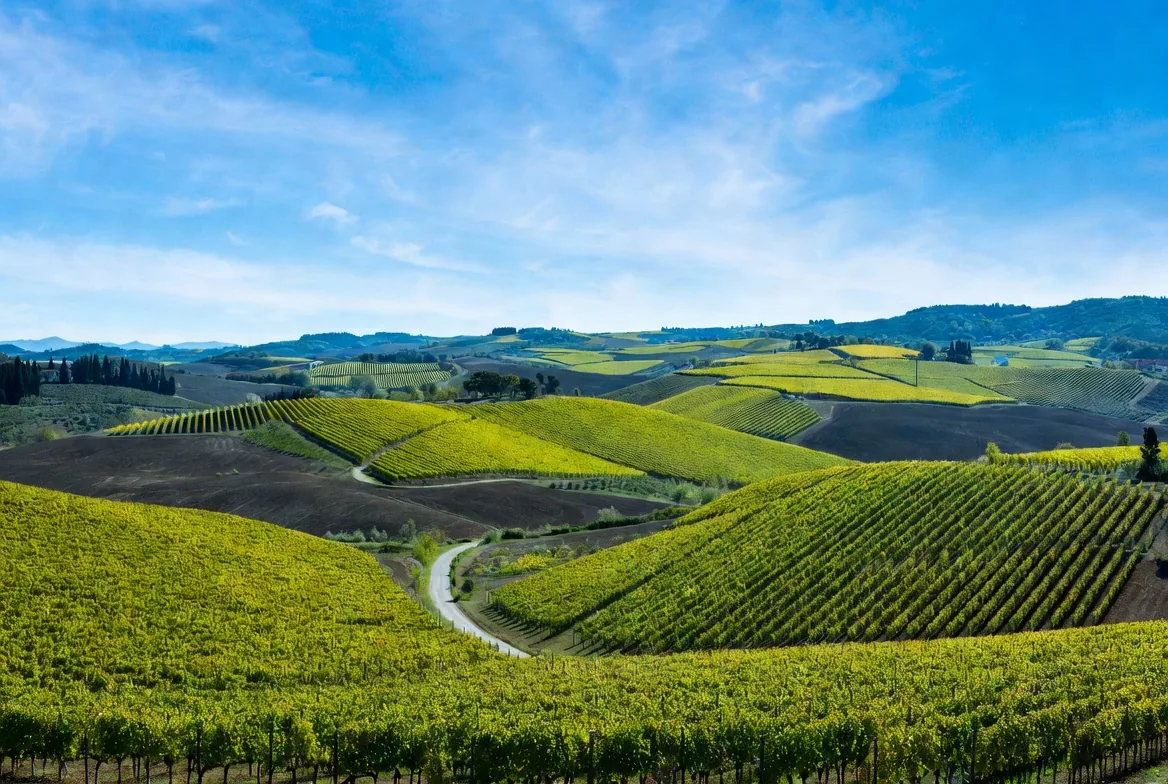
*Chianti’s appeal is the road between the stops, which is exactly what a bus timetable cannot give you.*
Best for: Wine, couples, small groups, and travellers who do not want to drive.
8. Val d’Orcia by guided tour
Pienza, Montalcino, Montepulciano, Bagno Vignoni, and the landscape between them are difficult to combine by public transport in one day.
A guided Val d’Orcia tour is not only a transport substitute. It is a way to see multiple places that would otherwise require a car.
Choose carefully. A tour listing five towns may provide very little time in each. A better itinerary often includes two main towns, a scenic route, and one food or wine experience.
Tour listings on Viator state the operator, group size, pickup point and cancellation window on the product page. Those four fields — not the photographs — are what separate a Val d’Orcia day from a coach circuit, so read them before comparing prices.
Best for: Classic Tuscany landscapes, photography, couples, and first-time visitors.
9. Montalcino and Brunello without driving
Montalcino is possible to reach through regional transport on some schedules, but winery access outside town makes independent planning difficult.
A wine tour is the stronger option when everyone wants to taste. Check whether the product includes:
- Estate visits.
- Town time.
- Tasting fees.
- Lunch.
- Water.
- Hotel pickup.
- Return location.
- Minimum age.
- Alcohol-free participation.
Do not book the highest tasting count as if it represents quality.
Best for: Brunello-focused travellers and wine education.
Can you visit Montepulciano without a car?
Yes, but it is not one of the easiest independent day trips from Siena. Public transport may require connections and leave limited flexibility. The town itself is steep.
Choose a guided Val d’Orcia or wine tour when Montepulciano is a priority. Independent travellers should verify every connection and avoid a tight return.
Can you visit the coast without a car?
The Tuscan coast is possible by train through connections, but from Siena it can consume a large part of the day. A coast day makes more sense when the itinerary already includes Florence, Pisa, or another rail hub.
Do not choose a destination because it appears close on a map. Rail lines and mountain or rural road patterns determine practical time.
Train, bus, or tour: how to choose
Choose the train when
- The destination has a central station.
- Frequency gives a safe return.
- You want independence.
- The city itself is the attraction.
Choose the bus when
- It arrives closer to the historic centre.
- The timetable works in both directions.
- The route reaches a hill town without rail.
Choose a guided tour when
- The value lies between villages.
- Wineries require appointments.
- Everyone wants to drink.
- Public transport would require several transfers.
- You want two or more rural stops.
Booking no-car transport
Use Trenitalia and Autolinee Toscane for official schedules, ticket rules, validation, stops, and disruption.
Commercial platforms can help compare bookable services, but not every regional bus is listed.
For tours, use marketplaces to compare products, then read the detailed itinerary rather than relying on the title.
Sunday and holiday warning
Regional transport can run less frequently on Sundays and holidays. A destination that works perfectly on Tuesday may be impractical on Sunday.
Check the calendar for:
- Italian national holidays.
- Local festivals.
- School-service differences.
- Strikes.
- Palio events.
- Road closures.
- Seasonal timetables.
Never rely on the weekday timetable shown in an old screenshot.
Where to stay for no-car day trips
A property near Piazza Gramsci, Viale Tozzi, Porta Camollia, or a practical station connection can reduce daily transfer time. The best location depends on whether your planned trips use bus or train.
Use where to stay in Siena and Siena hotel vs apartment before choosing accommodation only for views.
A three-day no-car Siena plan
Day 1
Explore Siena using the best things to do in Siena.
Day 2
Take one independent rail or bus trip: Florence, Arezzo, or San Gimignano.
Day 3
Book one countryside tour: Chianti or Val d’Orcia.
This creates contrast without repeating the same transport style.
Common no-car mistakes
Planning multiple rural towns on public buses
Waiting time can consume the day.
Checking only the outbound journey
The last return controls the plan.
Assuming every bus appears in a global app
Use the regional operator.
Booking a wine tasting without transport from the town
The estate may be several kilometres away.
Treating a tour title as a detailed itinerary
Read time at each stop.
Returning to Siena too late for the final uphill transfer
Account for station-to-centre time.
Final recommendation
A no-car Tuscany trip works when you stop asking public transport to imitate a road trip. Use trains and buses for the destinations they serve well, then choose one guided countryside day for the vineyards and villages between the stations.
From Siena, that can mean a morning train to an art city, a bus toward medieval towers, and one day when someone else handles the rural road—leaving you free to watch Tuscany unfold beyond the window.
*Editorial fact-check: July 12, 2026. Train, bus, stop, strike, tour, and winery information changes. Verify official schedules and final return options before travel. Disclosure: the Viator link on this page is an affiliate link — if you book a tour through it we may earn a commission, at no extra cost to you. Which destinations suit public transport and which need a guided day are editorial judgements it does not touch. Platform links use our internal /go/ shortcuts.*
Helpful summary
The short version
Every Siena day trip that works on public transport: the bus lines, the realistic journey times, and the Sunday rule that ruins plans.
Frequently asked
FAQ
Keep reading
Florence to Siena Day Trip 2026: The Plan That Beats the Coaches
Florence to Siena in 2026: bus or train, a one-day plan that dodges the coach crowds, and why the last bus decides your afternoon.
7 min read · Updated 2026-07-17
San Gimignano Day Trip from Siena: Bus, Tickets & One-Day Plan (2026)
San Gimignano on bus 130 from Siena: 2026 ticket and parking prices, and a one-day plan built around the hours the coaches are gone.
13 min read · Updated 2026-07-31
10 Day Trips from Siena: Choosing One Instead of Racing Three
Ten day trips from Siena — which reward a car, which work by bus, and how to pick one good day instead of racing through three.
9 min read · Updated 2026-07-12